Krav Maga is a practical, no-nonsense self-defense system designed to keep everyday people safe in real-world situations. At Seaside Krav Maga we teach simple, effective skills that work under pressure — for every age, fitness level, and background.
How the System Works
Built to Work Under Pressure
In a sudden, dangerous moment there is no time to reason your way to safety — your body reacts before your conscious mind catches up. The problem is that an untrained brain, faced with something it has never rehearsed, can stall. That hesitation is the freeze response, and removing it is exactly what realistic training is built to do. By drilling practical responses again and again, you build a set of trained instincts you can count on when it matters: you learn to steady your fear, put the surge of adrenaline to work, and move decisively instead of locking up.
Simple Tools, Made Your Own
Krav Maga is designed to work with the body you already have. Instead of elaborate techniques that take years to master, it builds on big, natural movements you can perform with very little thinking — and with repetition, those movements become fast and automatic. There is no single “correct” way to handle a confrontation. Every person brings different strengths, so the system adapts to you rather than forcing you to fit a rigid mold.
Self-Defense Isn’t Sport Fighting
There is an important difference between a regulated sport match and defending yourself in the real world. Competition has rules and referees; a violent encounter has neither. Many of the targets and tactics that are off-limits in the ring are precisely the ones that matter most when your safety is on the line, and our training stays honest about that reality while keeping everyone safe in the gym.
When you do have to act, the goal is a continuous, overwhelming response — defending and counterattacking at nearly the same time and flowing from one technique to the next without pause. In Krav Maga this is known as retzev, or continuous combat motion, and it forms the backbone of the system. Your aim is never to “win” for its own sake; it is to escape and get to safety. The force you use should match the threat you face, and once that threat is over, you stop.
Reading the Warning Signs
Often the best defense begins before anything physical happens. Learning to read hostile body language can buy you precious seconds to leave or to prepare. Common signals that someone may be escalating toward violence include:
- Trembling hands or limbs, muscle twitches, or clenched fists and jaw
- Sweating, quicker breathing, or rapid blinking
- Leaning the upper body forward toward you
- Rising onto the balls of the feet, as if loading to move
- Drawing back a shoulder or turning the body side-on
- Tensing or stiffening the neck
- Tightening the lips or sneering
- A noticeable shift in breathing, either fast or deliberately slow
- Puffing up the chest, getting loud, and flushing red in the face or neck
- Suddenly turning pale — one of the clearest signs the body is bracing for violence
- Narrowed eyes locked on a target, sometimes with a brief widening just before acting
- Shedding a jacket or bag to free up the arms
How We Train
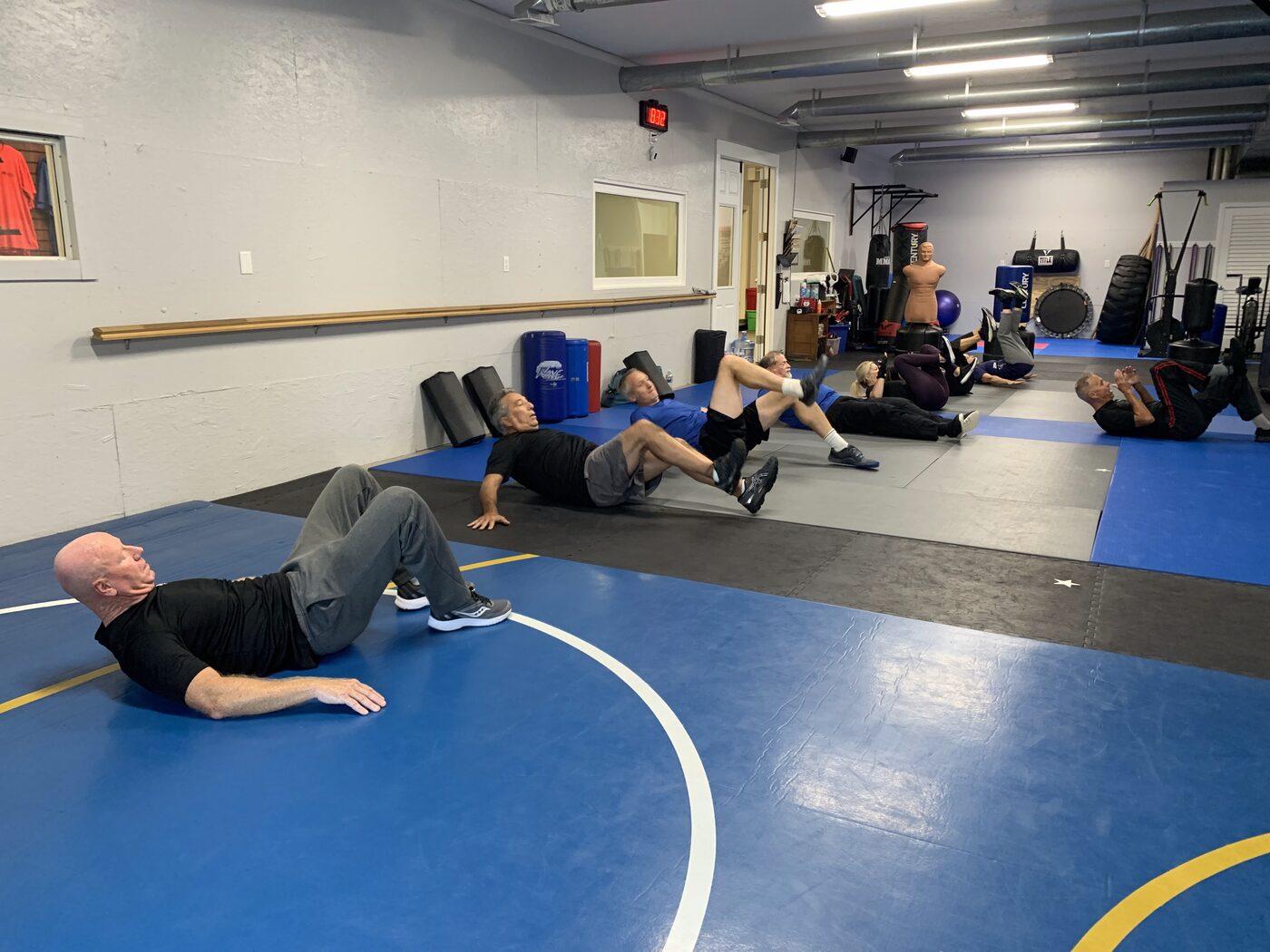
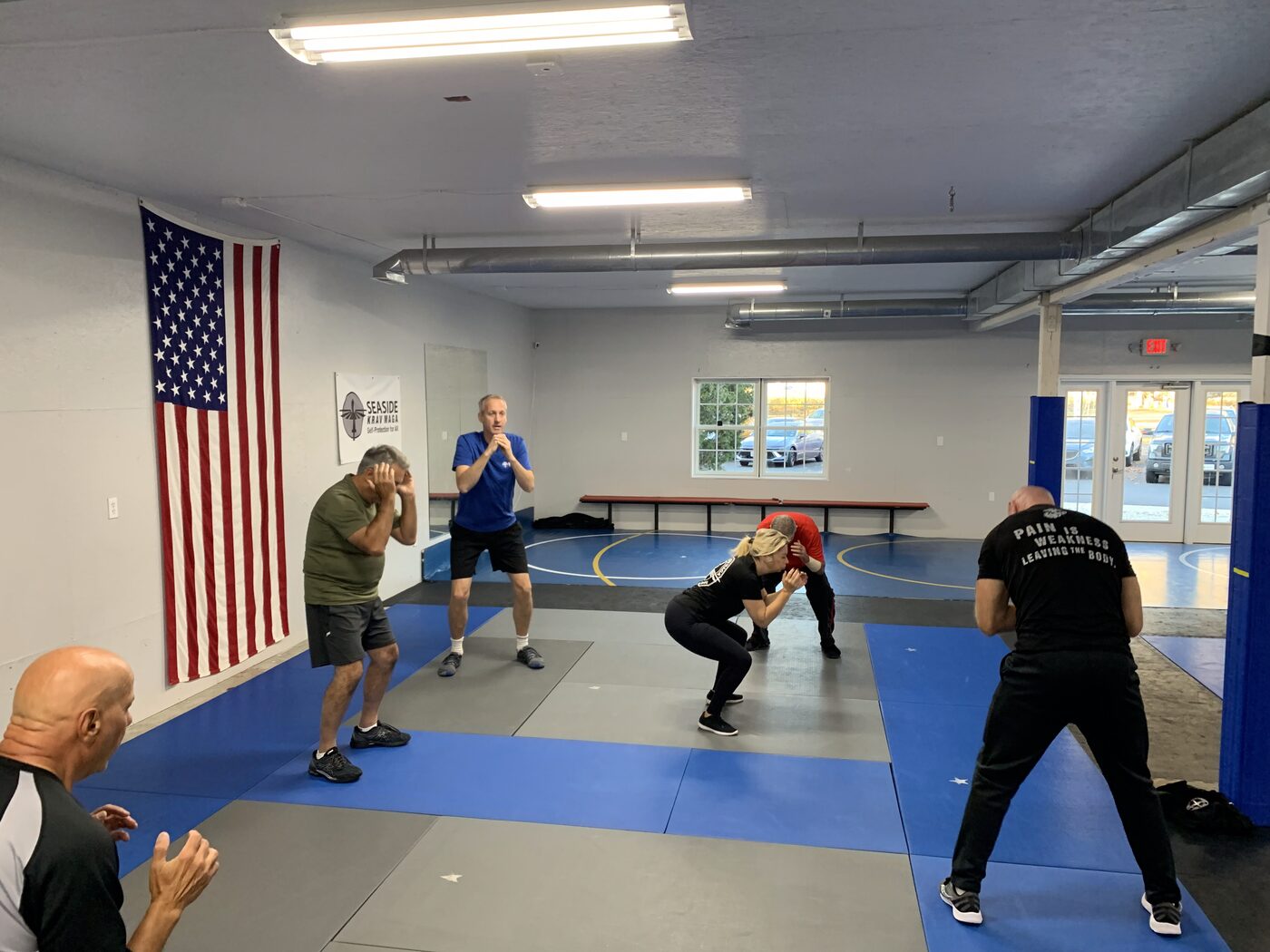
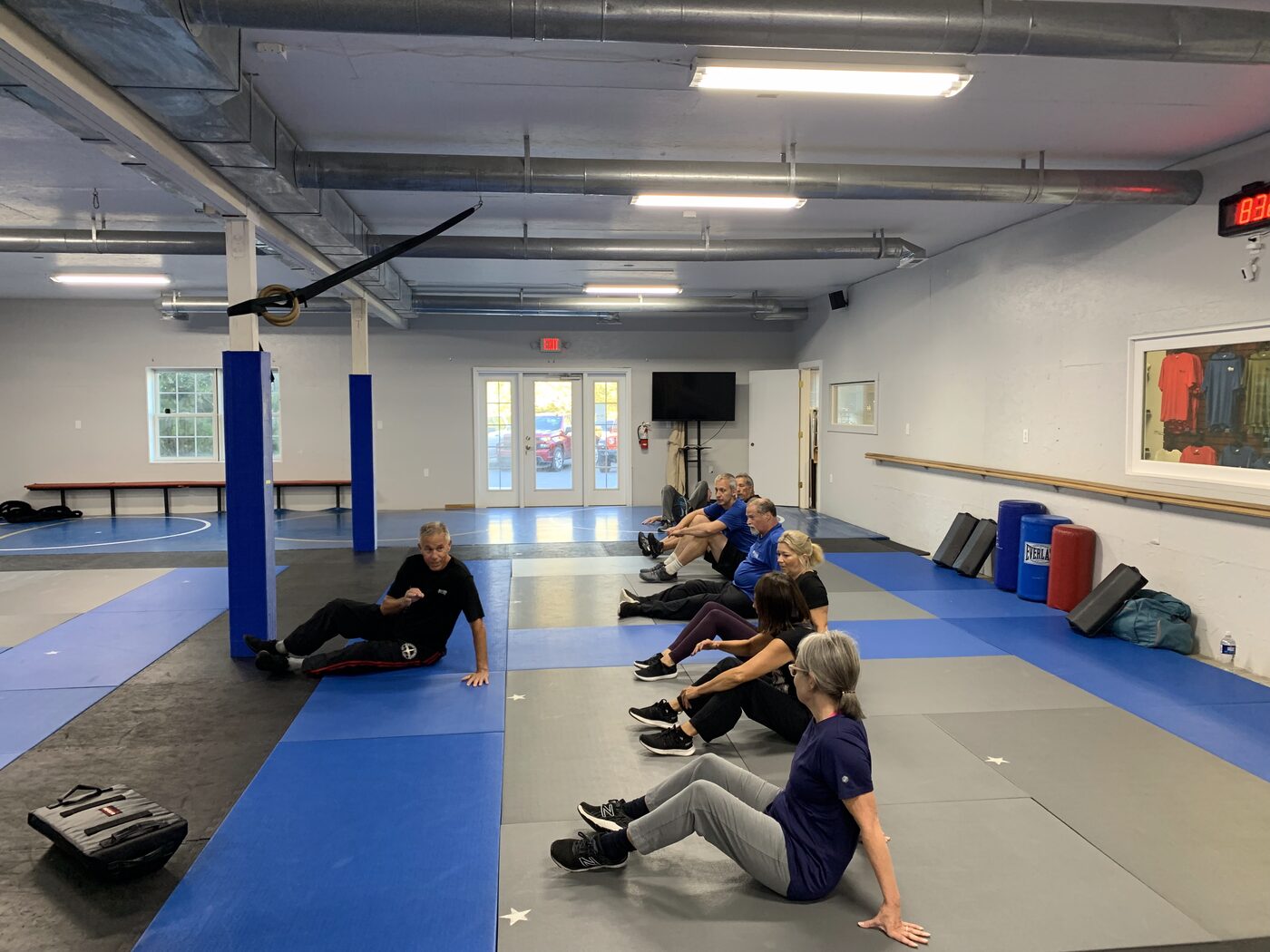
Skill comes from training the way things really happen. In class you practice a focused set of techniques under simulated pressure and at realistic speed — always with safety first — so the right response becomes automatic when you need it. We encourage you to make the techniques your own by leaning into the movements that feel most natural and give you the most confidence. The mental side matters just as much: picturing situations in advance and rehearsing your response builds the same kind of conditioned reaction as physical practice, lowering fear and sharpening technique for moments you have never literally faced.